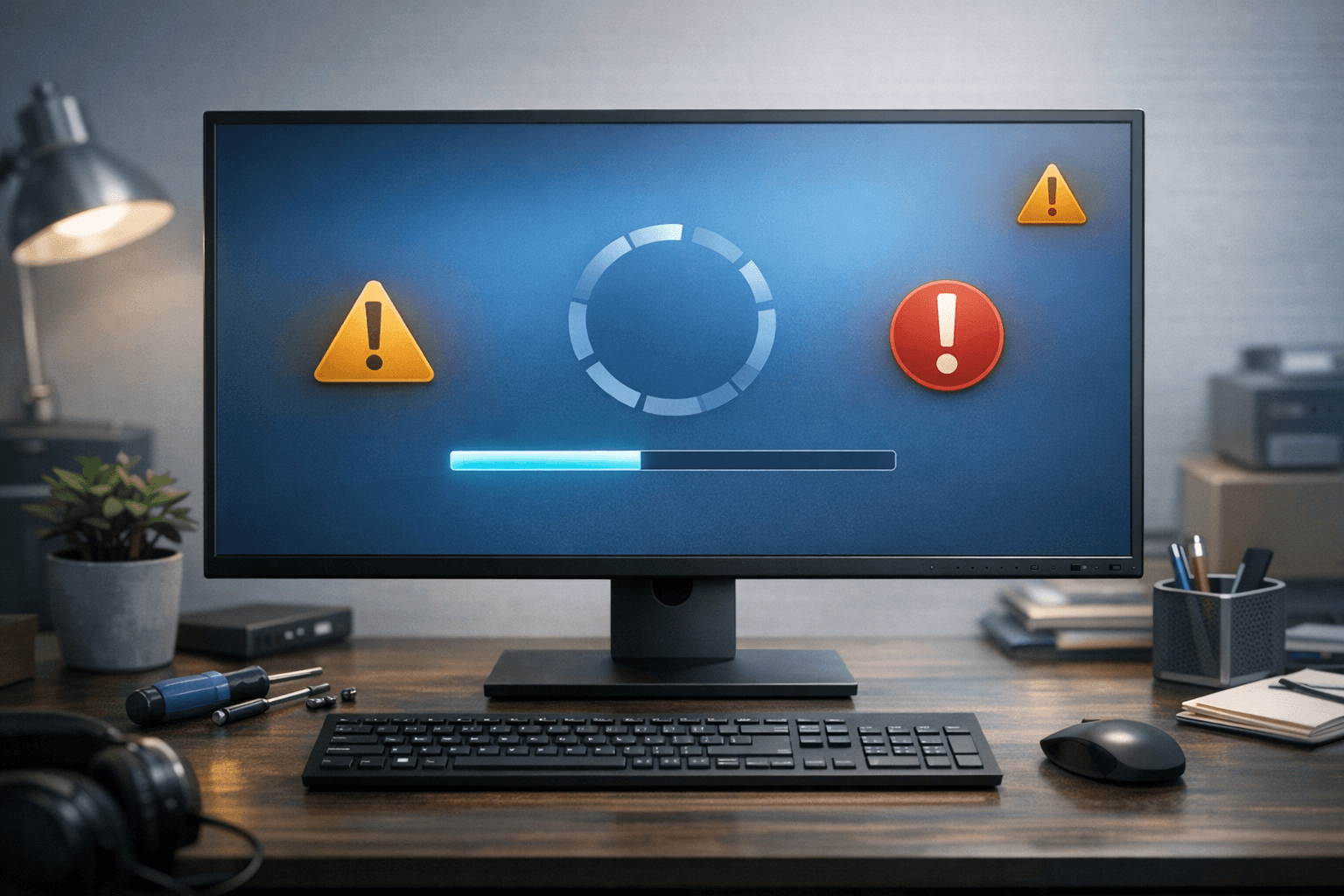
Common causes
- The upgrade assistant is blocked by pending corruption or component store issues.
- The update process is interrupted by drivers, security tools, or low disk headroom.
- Windows servicing files are damaged, leaving the assistant stuck or repeatedly failing.
Advertisement
Who this guide is for
- You are troubleshooting a windows issue, not choosing new software yet.
- The main problem matches this cluster: windows update errors.
- You want the fastest reliable fixes first before trying a reset or reinstall.
Step-by-step fixes
Step 1
Confirm free space and remove obvious blockers
Clear disk pressure, disconnect unnecessary peripherals, and temporarily pause aggressive endpoint tools that hook into upgrades.
Step 2
Repair Windows servicing health
Run DISM and SFC to restore the component store and system-file integrity before rerunning the assistant.
Step 3
Reset update state if repeated failures persist
Clear Windows Update cache and retry only after the repair checks complete cleanly.
Step 4
Fallback to ISO-based upgrade or alternate recovery path
If the assistant keeps failing, use a mounted ISO or a broader repair path instead of looping the same upgrade tool.
What to do next if this fails
- Move to the next fix instead of repeating the same step multiple times.
- Check the related guides in this cluster before attempting a full reset.
- If startup, update, and corruption symptoms overlap, widen the diagnosis instead of treating one error in isolation.
Advertisement
FAQ
What usually causes windows update assistant?
Start with the most common software, configuration, or environment issues first, then escalate to deeper fixes if they fail.
When should someone stop troubleshooting windows update assistant manually?
If repeated repairs fail, system corruption returns, or boot stability keeps breaking, move to deeper recovery or repair-tool workflows.